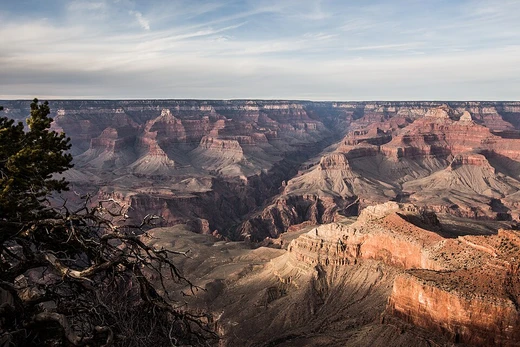
Gravel
Loose rock fragments used widely in construction and concrete.

Mnalis · CC BY 4.0
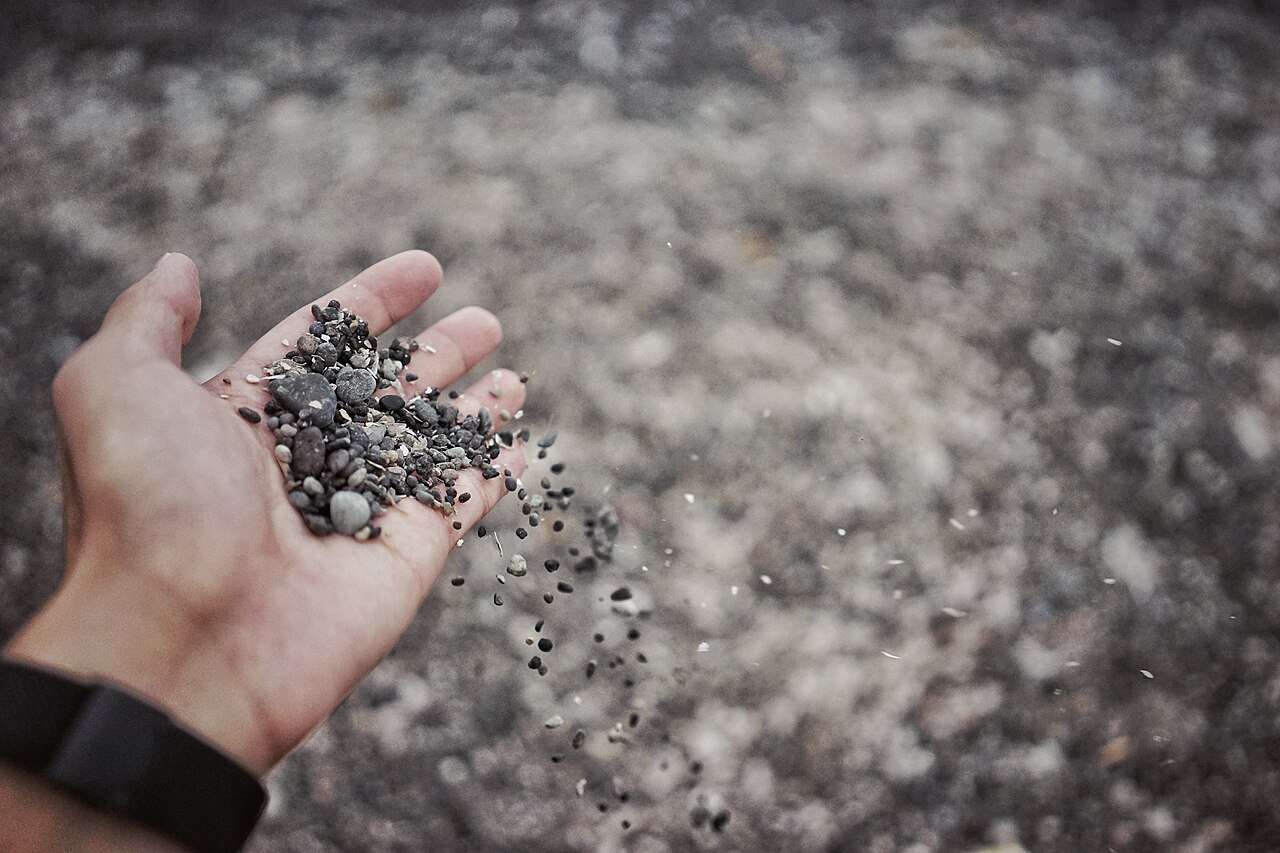
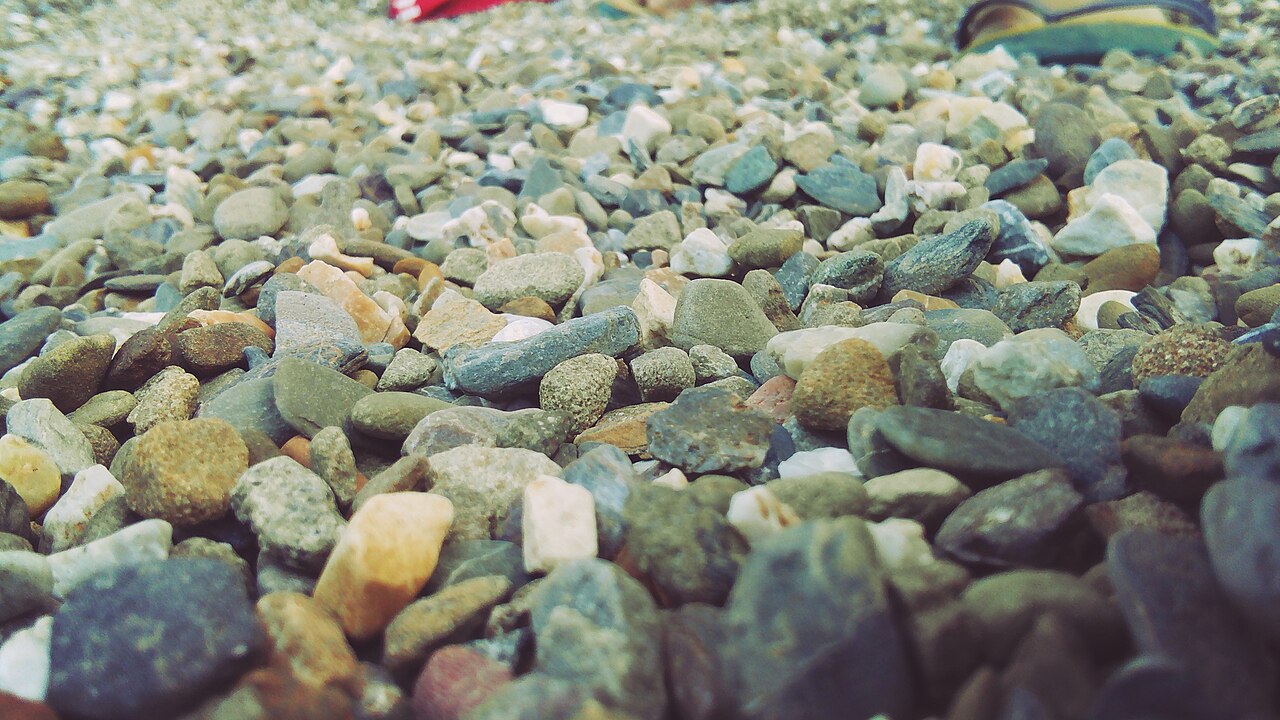
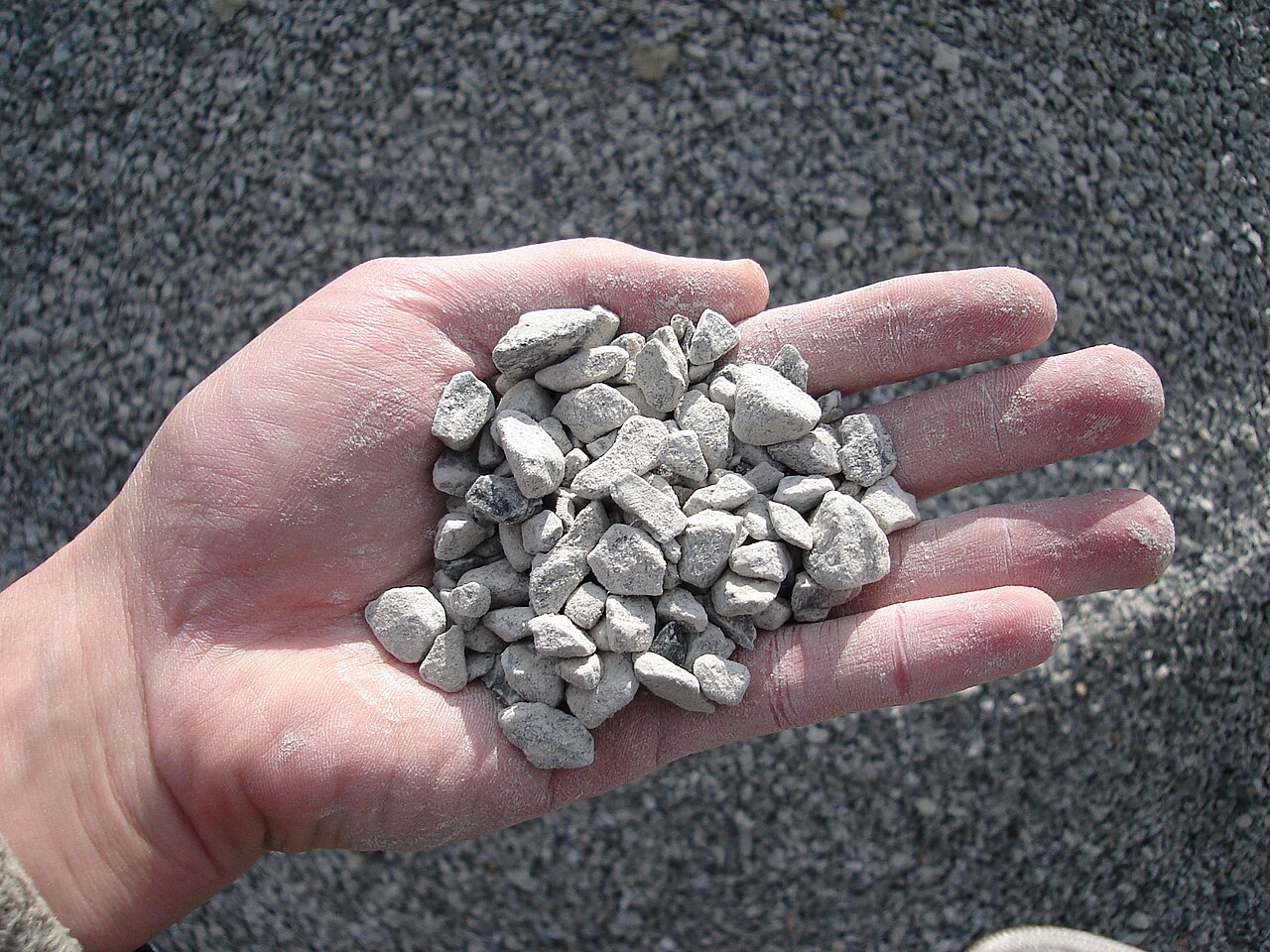
Gravel is a loose aggregation of rock fragments that occurs naturally on Earth as a result of sedimentary and erosive geological processes, and is also produced commercially as crushed stone. It is an important commercial product, with applications including use as aggregate for concrete and in road construction.
- classification
- Particle size range from 2 mm to 64 mm (Udden-Wentworth scale) or up to 200 mm (German scale)
- common_mineral
- Quartz
- primary_uses
- Aggregate for concrete, road construction, construction fill
- hydraulic_conductivity
- High, sometimes above 1 cm/s
Lore & Background
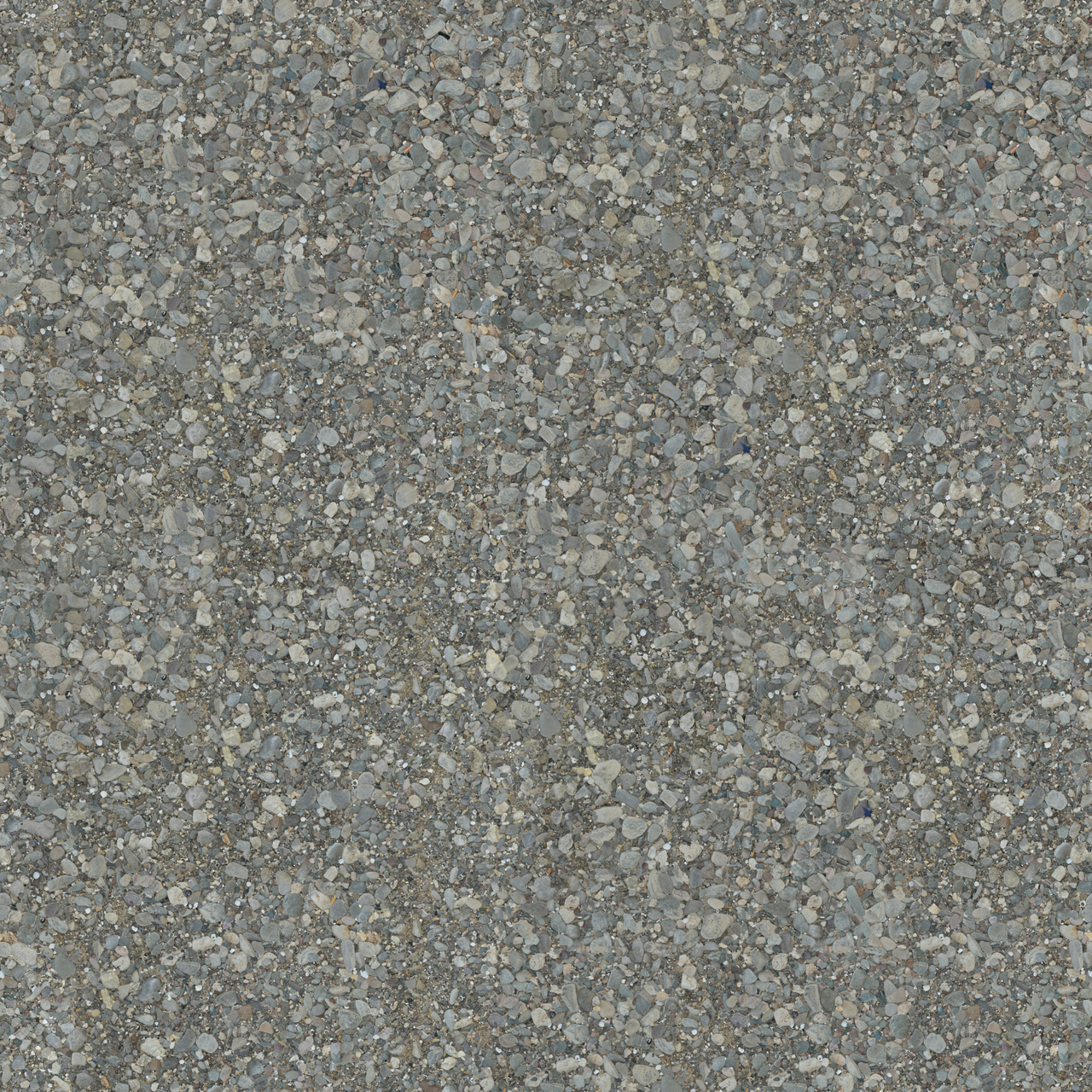
Gravel is formed from the disintegration of bedrock as it weathers, with quartz being the most common mineral due to its hardness and chemical inertness. Rock fragments may become rounded during river transport, but the rate depends on lithology, transport distance, and energy; many gravels remain angular for much longer distances. Gravel is deposited as blankets or bars in stream channels, alluvial fans, near-shore marine settings, and deltas of swift-flowing streams. The upper Mississippi embayment contains extensive chert gravels thought to have been transported from sources hundreds of miles away, not less than 100 miles. Wind-formed gravel 'megaripples' in Argentina have been suggested to have counterparts on Mars.
Reader's Guide
Gravel is a major basic raw material in construction, with sand and gravel together making up 23% of all industrial mineral production in the U.S. Almost half of construction sand and gravel is used as aggregate for concrete, with other important uses in road construction, as road base or in blacktop, and as construction fill. Gravel is widely and plentifully distributed, mostly as river deposits, river flood plains, and glacial deposits, though environmental considerations and quality dictate whether alternatives like crushed stone are more economical. Crushed stone is already displacing natural gravel in the eastern United States, and recycled gravel is becoming increasingly important. Naturally occurring porous gravel deposits have high hydraulic conductivity, making them important aquifers. In the geologic record, sediments containing over 30% gravel that become lithified into solid rock are termed conglomerate, which are widely distributed but usually make up less than 1% of all sedimentary rock.
Did You Know?
- The Udden-Wentworth scale defines granular gravel as 2–4 mm and pebble gravel as 4–64 mm.
- Gravel is sometimes distinguished from rubble, which is angular in shape.
- The word gravel comes from the Old French 'gravele' or 'gravelle'.
Classification and Physical Properties
Gravel is fundamentally a loose collection of rock fragments, but pinning down exactly what qualifies as gravel has proven surprisingly tricky across disciplines and regions. Geologists in the United States commonly rely on the Udden-Wentworth scale, which splits gravel into two bands: granular gravel spanning two to four millimetres and pebble gravel covering four to sixty-four millimetres. European soil engineers working under ISO 14688 prefer a three-tier system of fine, medium, and coarse grades, while the U.S. Department of Agriculture stretches the upper boundary to eighty millimetres and the German Atterburg scale pushes it all the way to two hundred millimetres. The U.S. Army Corps of Engineers takes yet another approach, defining gravel by what a number-four mesh screen retains. Beyond size, shape matters: rounded particles are called gravel, whereas angular fragments of the same dimensions are termed rubble, and material produced by mechanical crushing falls under the separate category of crushed stone. In terms of physical behaviour, a cubic metre of gravel typically tips the scales at roughly one thousand eight hundred kilograms, and natural deposits exhibit hydraulic conductivity that can exceed one centimetre per second, a property that makes them exceptionally effective as groundwater reservoirs.
Geological Origins and Transport
Most gravel on Earth begins its life as bedrock slowly breaking apart under the relentless pressure of weathering. Quartz dominates the mineral makeup of typical gravel deposits because it is exceptionally hard, chemically resistant, and lacks the cleavage planes that cause other minerals to split predictably. Since very few rocks contain individual mineral grains larger than roughly eight millimetres, the majority of gravel particles are composite fragments made up of several different minerals locked together. Notable exceptions include quartz veins, pegmatites, deep igneous intrusions, and high-grade metamorphic rocks, which can produce coarser single-mineral fragments. Once freed from their parent rock, these fragments are rapidly rounded as rivers carry them downstream, often losing their sharp edges within a few tens of kilometres of their source outcrops. The resulting deposits accumulate in diverse settings: as gravel blankets and bars within stream channels, on alluvial fans, in near-shore marine environments fed by coastal erosion, and in the deltas of fast-flowing rivers. One striking example is the Upper Mississippi embayment, where extensive chert gravels originated from bedrock less than one hundred miles from the embayment's edge. Wind-shaped gravel megaripples found in Argentina have been proposed as terrestrial analogues to similar features observed on Mars.
Industrial Scale and Economic Significance
Gravel is one of the most economically vital raw materials in modern construction, yet it rarely receives the public attention that steel or cement commands. In the United States alone, sand and gravel together accounted for twenty-three percent of all industrial mineral production in 2020, generating roughly twelve point six billion dollars in value. The sheer volume is staggering: approximately nine hundred sixty million tons of construction sand and gravel were produced that year, dwarfing the sixty-eight million tons of industrial sand and gravel, which is predominantly sand rather than gravel. Nearly half of all construction gravel finds its way into concrete as aggregate, while the remainder serves critical roles in road construction as base material or surface layer, in construction fill, and in countless smaller applications. Because gravel is widely and plentifully distributed across river deposits, flood plains, and glacial outwash, the decision to use natural gravel versus alternatives like crushed stone often comes down to local environmental constraints and quality considerations. In the eastern United States, crushed stone is already steadily displacing natural gravel, and recycled gravel is emerging as an increasingly important option. Beyond construction, naturally occurring porous gravel deposits serve as vital aquifers, storing and transmitting groundwater at rates that make them indispensable to regional water supplies.
Distinct Varieties and Specialized Uses
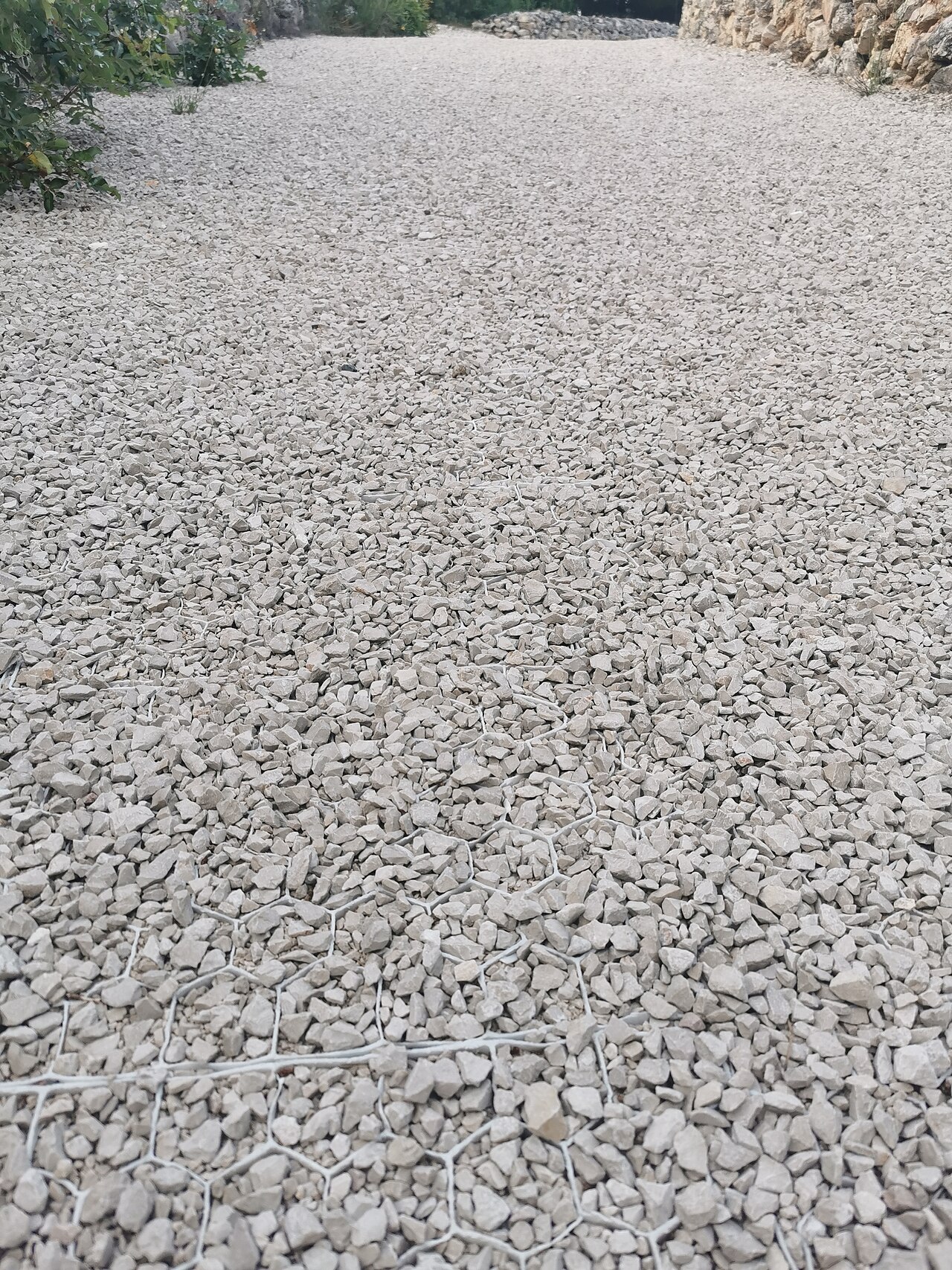
The gravel family encompasses a remarkable range of varieties, each defined by its composition, origin, or intended application. Bank gravel, also called bank run or river run, is naturally deposited material intermixed with sand or clay found in and alongside rivers and streams. Bench gravel occupies a higher position on a valley wall above the present stream channel, preserving a record of where the watercourse once flowed at a greater elevation; the term is especially common in Alaska and the Yukon Territory. Crushed stone, sometimes called crusher run, DGA, QP, or shoulder stone, is rock mechanically broken and graded through screens, then blended with fines for use as road and driveway surfacing, often with tar applied over the top. It can be produced from granite, limestone, dolomite, and other rock types. Fine gravel covers the two-to-six-point-three-millimetre range. Lag gravel forms when wind or water strips away finer particles, leaving behind a concentrated surface layer of coarser fragments. Perhaps the most famous variety is pay gravel, colloquially known as pay dirt, a gravel deposit with a high concentration of gold and other precious metals that prospectors recover through gold panning.
Gallery
Frequently Asked Questions
What is Gravel?
Gravel is a collection of loose rock fragments that forms naturally through erosion and sedimentary processes, or is manufactured commercially as crushed stone. It sits between sand and cobbles in the standard grain-size hierarchy.
What mineral is most commonly found in Gravel?
Quartz is the single most frequent mineral component in gravel deposits, owing to its exceptional hardness and resistance to chemical weathering.
What are the main practical uses of Gravel?
Gravel is most widely used as an aggregate in concrete mixtures, as a base material in road construction, and as general construction fill. Its high hydraulic conductivity—sometimes exceeding 1 cm/s—also makes it valuable in drainage applications.
Elsewhere in the Geology universe
Spotted an error? Know more?
This is a living reference — every entry is fact-audited, and reader corrections feed straight into our audit queue. Suggest an edit · See this site's audit record