Hotspot (geology)
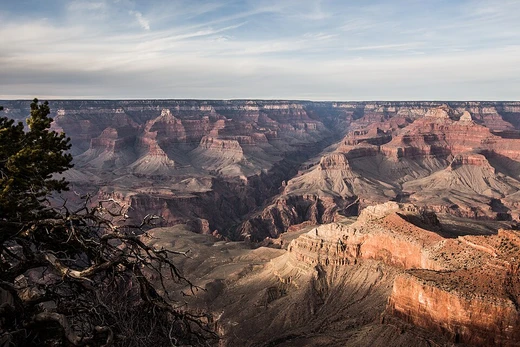
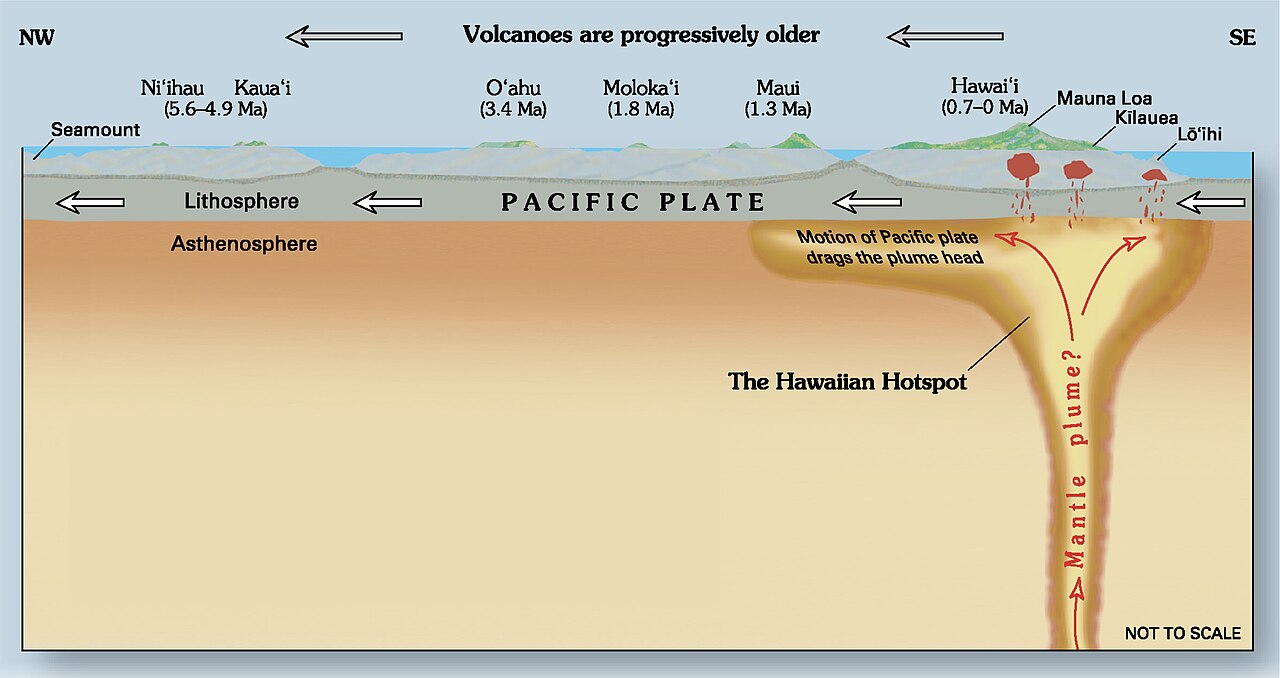
Volcanic hotspots are mantle-fed locales independent of plate boundaries.

Los688 · Public domain
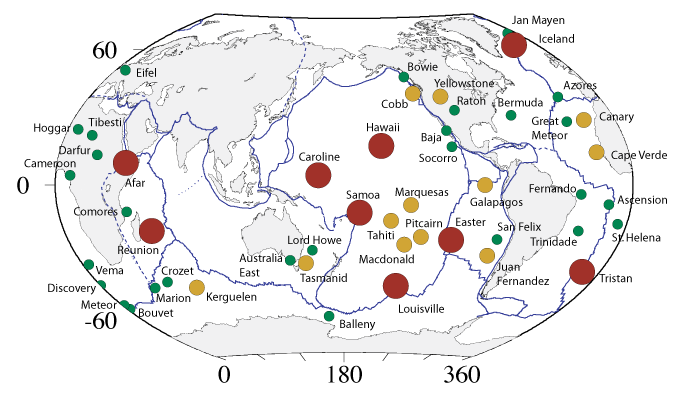
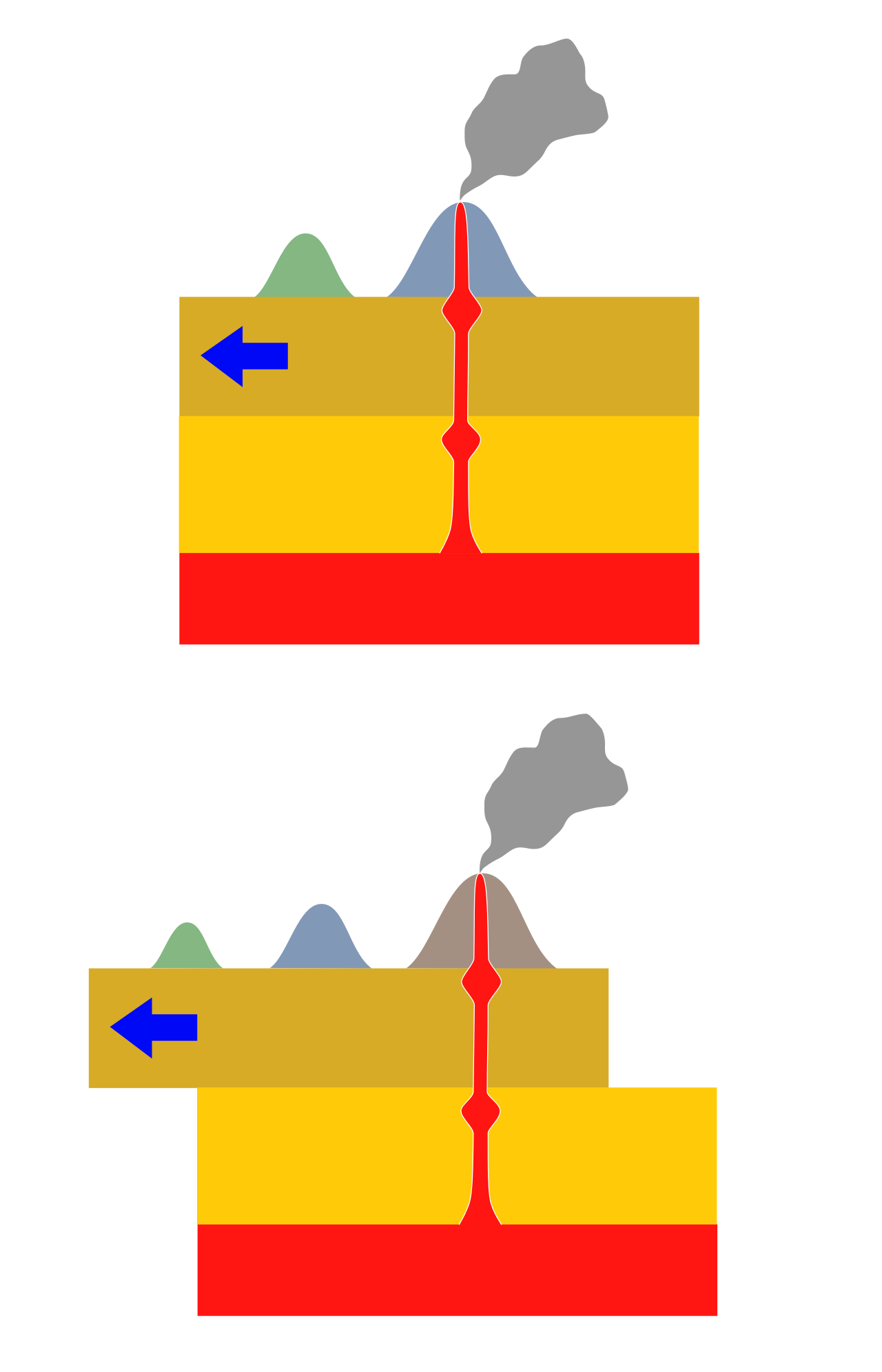
Hotspots (or hot spots) are volcanic locales thought to be fed by underlying mantle that is anomalously hot compared with the surrounding mantle. Their position on the Earth's surface is independent of tectonic plate boundaries, so they may create a chain of volcanoes as plates move above them. Examples include the Hawaii, Iceland, and Yellowstone hotspots. Two hypotheses explain their origins: one suggests mantle plumes rising as thermal diapirs from the core–mantle boundary; the alternative plate theory holds that the crust above is unusually weak or thin, permitting passive rising of melt from shallow depths.
- number_postulated
- Estimates range from about 20 to 50; most geologists consider a few dozen
Lore & Background
The concept of hotspots originated with J. Later, it was suggested that hotspots are fed by mantle plumes rising from the Earth's core–mantle boundary. Whether such plumes exist has been a major controversy, though seismic images consistent with evolving theory now exist. A review by Courtillot et al. distinguishes primary hotspots (from deep mantle, creating large volcanic provinces with linear tracks) and secondary hotspots (from upper/lower mantle boundary, forming island chains). Other potential hotspots result from shallow mantle material surfacing in areas of lithospheric break-up.
Reader's Guide
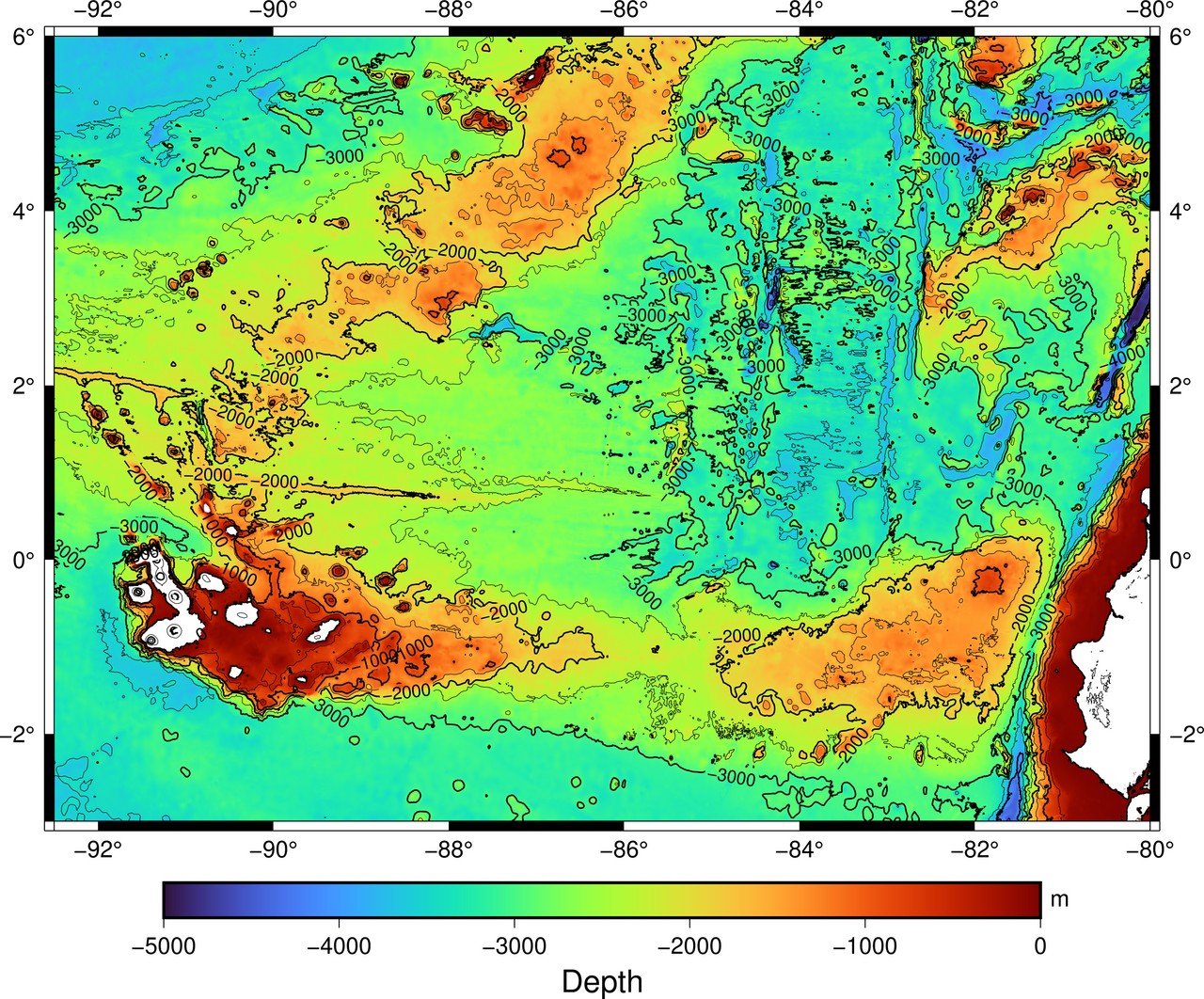
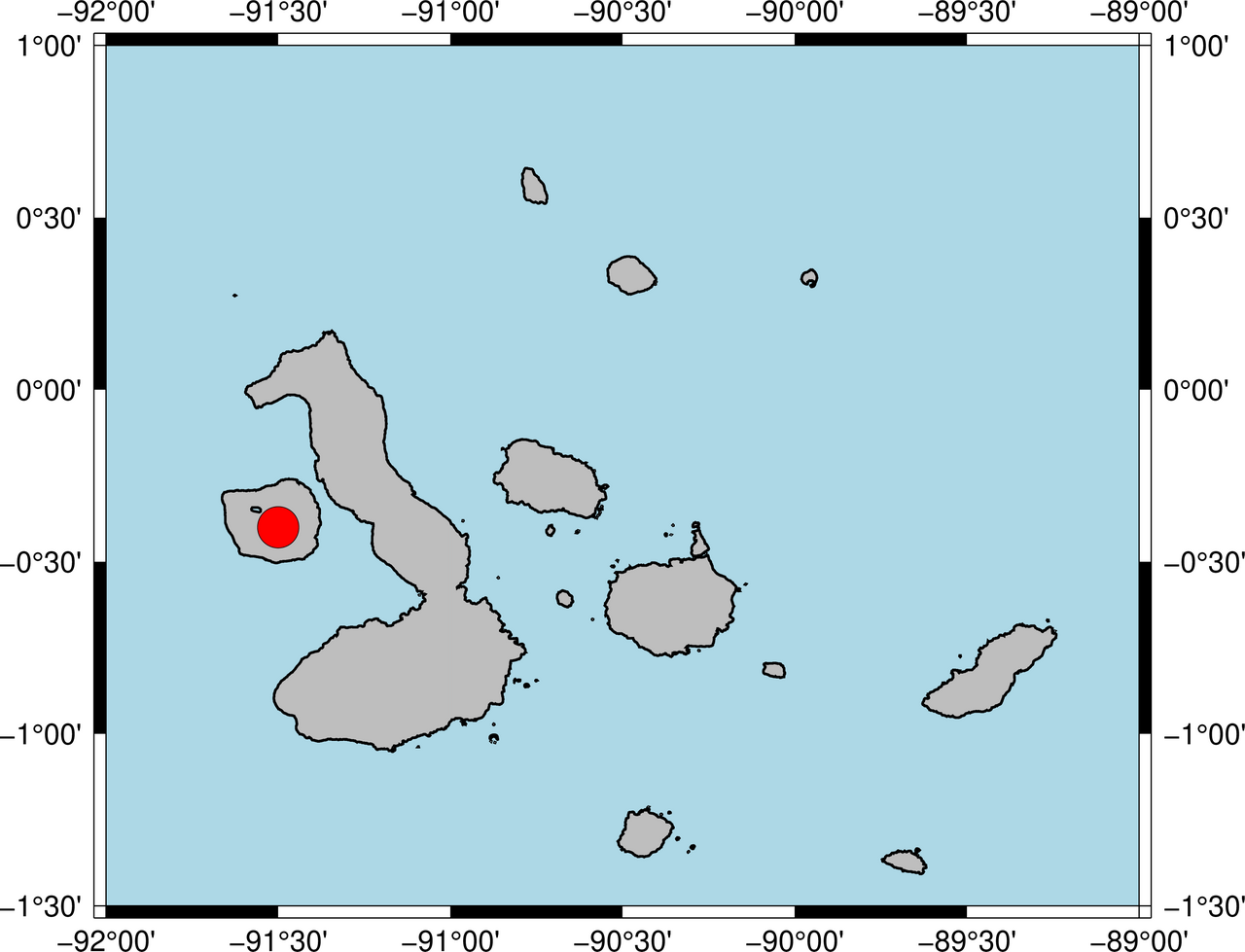
Hotspots are significant because they provide a mechanism for volcanism away from plate boundaries, helping explain volcanic chains like the Hawaiian–Emperor seamount chain and Yellowstone. The hypothesis links to mantle plume theory, though debate persists. Hotspot volcanic chains have been used to track tectonic plate movement, but this effort is complicated by the lack of very long chains, non-time-progressive chains (e.g., Galápagos), and hotspots not being fixed relative to one another. Most hotspot volcanoes are basaltic and less explosive than subduction zone volcanoes, except in continental regions where basaltic magma melts crust to form rhyolites, as at Yellowstone. The joint plume/hotspot hypothesis originally envisaged fixed feeder structures, but later observations show plumes are more complex, tilted, and move independently.
Did You Know?
- Hotspots are thought to be fed by mantle that is anomalously hot compared with surrounding mantle.
- Most hotspot volcanoes are basaltic and less explosive than subduction zone volcanoes.
- Several hotspots, including Hawaii, Iceland, and Yellowstone, have been studied with seismic imaging, though evidence for deep mantle plumes remains ambiguous and contested.
Birth of the Hotspot Concept
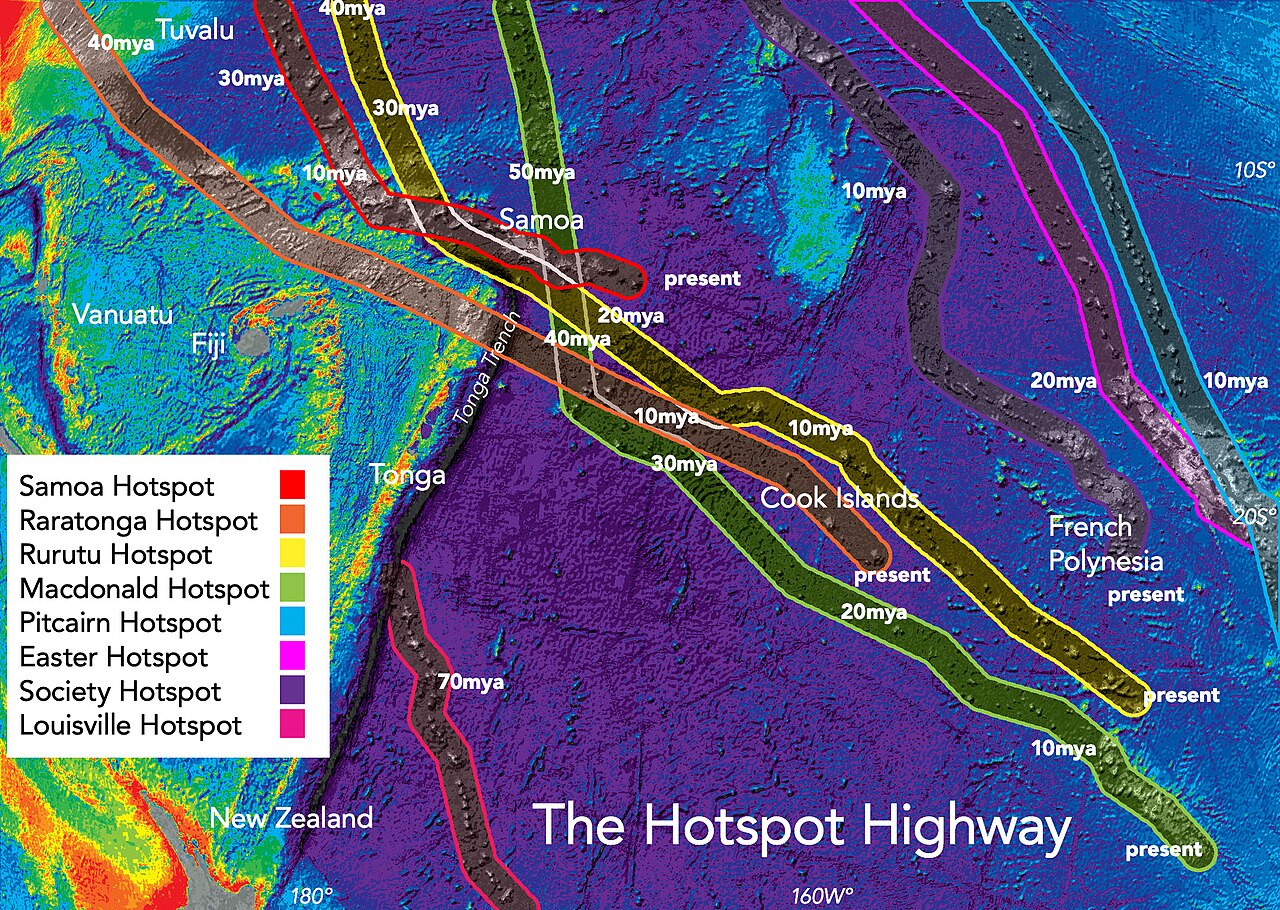
The concept of geological hotspots traces back to 1963, when J. Tuzo Wilson proposed that the Hawaiian Islands were built by a tectonic plate slowly drifting over a persistently hot zone beneath the surface. This elegant idea quickly expanded: scientists began suggesting that these hot zones were actually fed by rivers of anomalously hot mantle material rising all the way from the core–mantle boundary in structures they called mantle plumes. The existence of such plumes became one of Earth science's great controversies, though seismic imaging consistent with the evolving theory has since emerged. The hotspot label has since been applied to any volcanic site whose activity cannot be tied to a constructive or destructive plate margin. A landmark review by Courtillot and colleagues drew a useful distinction between primary hotspots—rooted at the core–mantle boundary and producing large volcanic provinces with linear tracks, such as Hawaii, Iceland, and Réunion—and secondary hotspots originating at the upper–lower mantle boundary, which tend to generate island chains like those of Samoa and Tahiti. Estimates of how many plume-fed hotspots exist have swung wildly, from roughly twenty to several thousand, with most geologists settling on a few dozen.
Two Rival Explanations
Geologists have long debated whether hotspots truly owe their existence to deep thermal anomalies or to something far more mundane. The mantle-plume hypothesis holds that columns of unusually hot rock—thermal diapirs—rise from the core–mantle boundary and feed surface volcanism. The rival plate theory, by contrast, argues that the mantle beneath a hotspot is no hotter than its surroundings; instead, the overlying crust is abnormally thin or mechanically weak, so that lithospheric extension allows melt to passively rise from shallow depths. Both models agree on one observable: because a hotspot's surface position is independent of tectonic plate boundaries, the slow drift of plates overhead can stamp out a chain of volcanoes. Yet the plumes that have been imaged so far complicate the picture. They vary enormously in width, are tilted rather than vertical, and bear little resemblance to the simple, narrow, purely thermal columns many originally expected. To date, only the Yellowstone system has been consistently modelled and imaged from the deep mantle all the way to the surface, making it the single best-tested case for the plume interpretation.
Magma, Explosions, and the Yellowstone Exception
Most hotspot volcanoes produce basaltic lava, as seen at Hawaii and Tahiti, and this composition keeps eruptions comparatively gentle. Subduction-zone volcanoes, by contrast, trap water beneath the overriding plate; when that water is released into the rock, it dramatically increases explosivity. Hotspots behave very differently when they sit beneath continental crust rather than oceanic crust. There, ascending basaltic magma encounters and partially melts the surrounding continental rock, generating rhyolitic magma capable of producing some of the most violent eruptions in geological history. The Yellowstone Caldera is the textbook example. Yet the story does not end with the rhyolite. Once the more volatile rhyolitic batch is fully expelled, the same lithospheric fissures can be reoccupied by basaltic flows, producing a quieter phase of volcanism. The Ilgachuz Range in British Columbia illustrates this sequence beautifully: an early episode of trachyte and rhyolite eruptions was followed by a late series of basaltic lava flows. Modern compositional studies of hotspot basalts have also allowed researchers to link samples across vast regions, strengthening the connection between the hotspot and mantle-plume frameworks.
Chains of Fire and the Puzzle of Plate Motion
When the hotspot and mantle-plume ideas were first joined, the model assumed that plume feeder structures were fixed in place while continents and seafloor drifted overhead. The natural prediction was a time-progressive chain of volcanoes: the oldest, most eroded features at one end and the youngest at the other. The Hawaiian archipelago fits this picture neatly, with islands growing progressively older and more deeply weathered toward the northwest. Yellowstone sits at the active end of a trail of extinct calderas that age steadily to the west. Geologists eagerly tried to use such chains as a record of plate motion, but the effort ran into persistent problems. Many candidate chains are not time-progressive—the Galápagos is a notable case—and hotspots clearly do not remain fixed relative to one another, as the divergent tracks of Hawaii and Iceland demonstrate. The resolution is that plumes are far more complex and mobile than the original simple model allowed. In 2020, Wei and colleagues used seismic tomography to locate the oceanic plateau created roughly one hundred million years ago by the hypothesized plume head of the Hawaii–Emperor chain, now subducted to a depth of eight hundred kilometres beneath eastern Siberia.
Gallery
Frequently Asked Questions
What exactly is a hotspot in geology?
A hotspot is a volcanic region on Earth's surface that draws its heat from a patch of mantle that is significantly hotter than the mantle around it. Crucially, these spots sit independently of any tectonic plate boundary, which is what makes them distinct from mid-ocean ridges or subduction zones.
How does a hotspot produce a chain of volcanoes?
Because the hotspot stays roughly fixed in depth while the tectonic plate above it keeps drifting, each volcano is eventually carried away from the heat source and goes dormant. Over millions of years this leaves a linear trail of progressively older islands or seamounts, as seen in the Hawaiian-Emperor chain.
What are the best-known examples of hotspots?
The three most frequently cited are the Hawaii hotspot (which built the Hawaiian island chain), the Iceland hotspot (which sits near the Mid-Atlantic Ridge), and the Yellowstone hotspot (which underlies the supervolcano in the western United States).
What is the main scientific debate over what causes hotspots?
One camp argues that deep mantle plumes—thermal diapirs rising from the core–mantle boundary—feed the hotspots. The rival plate-theory explanation says the crust above is simply unusually thin or weak, allowing ambient melt to rise passively without any deep plume at all.
How many hotspots does the geology community think exist?
Estimates in the literature range anywhere from roughly twenty to fifty sites. Most working geologists settle on a figure of a few dozen as the most defensible count.
Elsewhere in the Geology universe
Spotted an error? Know more?
This is a living reference — every entry is fact-audited, and reader corrections feed straight into our audit queue. Suggest an edit · See this site's audit record