Gypsum
A soft sulfate mineral used in plaster, fertilizer, and sculpture.

PePeEfe · CC BY-SA 4.0
Gypsum is a soft sulfate mineral composed of calcium sulfate dihydrate, with the chemical formula CaSO4·2H2O. It is widely mined and used as a fertilizer and as the main constituent in many forms of plaster and drywall. (Note: Modern blackboard or sidewalk chalk is typically made from calcium carbonate, not gypsum.) Gypsum also crystallizes as translucent crystals of selenite and forms as an evaporite mineral and as a hydration product of anhydrite. On the Mohs scale of mineral hardness, gypsum has a hardness value of 2 based on scratch hardness comparison.
- chemical_formula
- CaSO4·2H2O
- mohs_hardness
- 2
- solubility
- ~2.0–2.5 g/L at 25°C, retrograde solubility
- common_varieties
- selenite, alabaster, satin spar, desert rose
- primary_uses
- fertilizer, plaster, drywall, sculpture
- notable_deposits
- White Sands National Park (USA), Naica Mine (Mexico), Montmartre (Paris)
Lore & Background
The word gypsum is derived from the Greek word gypsos, meaning 'plaster.' Because the quarries of the Montmartre district of Paris long furnished burnt gypsum (calcined gypsum) used for various purposes, this dehydrated gypsum became known as plaster of Paris. Upon adding water, after a few dozen minutes, plaster of Paris becomes regular gypsum (dihydrate) again, causing the material to harden or 'set' in ways useful for casting and construction. Gypsum was known in Old English as spærstān, 'spear stone,' referring to its crystalline projections; the word spar in mineralogy, by comparison to gypsum, refers to any crystalline, non-metallic mineral that is easily cleavable or lustrous. In the mid-18th century, the German clergyman and agriculturalist Johann Friderich Mayer investigated and publicized gypsum's use as a fertilizer. Gypsum may act as a source of sulfur for plant growth, and in the early 19th century, it was regarded as an almost miraculous fertilizer.
Reader's Guide
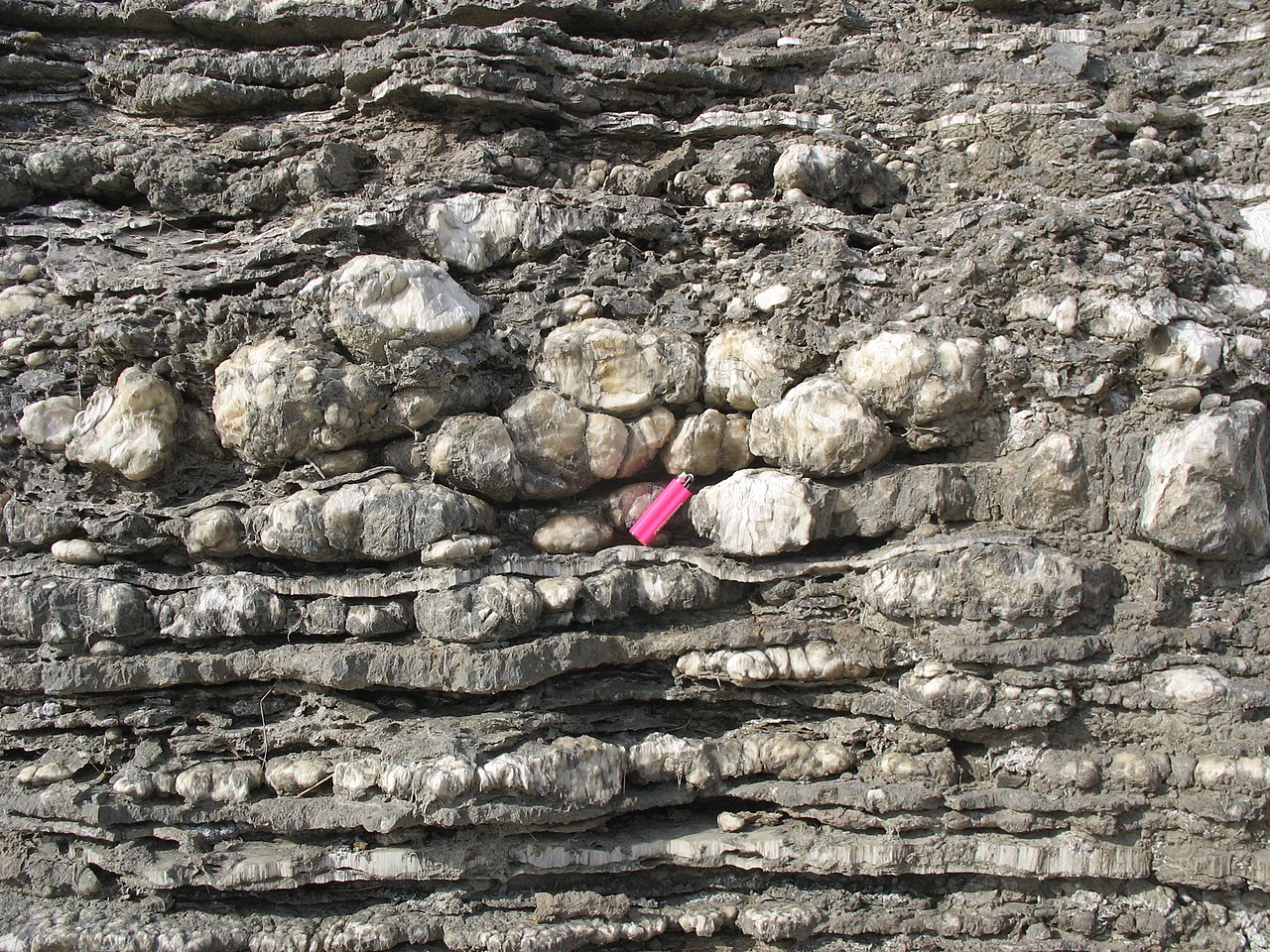
Gypsum is significant as one of the most common sulfate minerals, with thick and extensive evaporite beds in association with sedimentary rocks. Its moderate water solubility and retrograde solubility make it distinct among salts, and it can form karst landscapes, such as the UNESCO World Heritage Site Evaporitic Karst and Caves of Northern Apennines in Italy. Gypsum is also formed as a by-product of sulfide oxidation, and its presence indicates oxidizing conditions. Commercially, gypsum is mined in many countries, including Brazil, Pakistan, Jamaica, Iran, Thailand, Spain, Germany, Italy, England, Ireland, Canada, and the United States. Large open pit quarries exist in Fort Dodge, Iowa, and Plaster City, California. Crystals of gypsum up to 11 m long have been found in the Naica Mine of Chihuahua, Mexico. Synthetic gypsum is produced as a waste product or by-product in industrial processes, such as flue gas desulfurization at coal-fired power plants, desalination, and phosphate fertilizer production (phosphogypsum). Orbital pictures from the Mars Reconnaissance Orbiter have indicated gypsum dunes in the northern polar region of Mars, later confirmed at ground level by the Mars Exploration Rover Opportunity.
Did You Know?
- Gypsum exhibits retrograde solubility, becoming less soluble at higher temperatures.
- The largest gypsum crystals found in nature are up to 12 m (39 ft) long, in the form of selenite.
- Gypsum was known in Old English as spærstān, meaning 'spear stone,' due to its crystalline projections.
Naming, Mythology & Chemical Identity
The name selenite traces a long linguistic path: from Greek selēnítēs líthos, literally "moon stone," through Latin selenites and Middle English selenite, arriving at the modern term. The lunar association arose from a historical belief that the mineral's appearance waxed and waned in sympathy with the Moon's phases. Despite the suggestive spelling, selenite contains no selenium whatsoever; both names independently derive from the Greek selḗnē, meaning Moon. From the 15th century onward, the word specifically designated the transparent crystalline form of gypsum, although in contemporary usage it has broadened to cover satin spar, desert roses, and gypsum flowers as well. What unites all these varieties is a single chemical identity: calcium sulfate dihydrate, CaSO4·2H2O, in which every formula unit incorporates two water molecules. This shared composition underlies the family's remarkably diverse appearances.
Crystal Habits & the Four Varieties
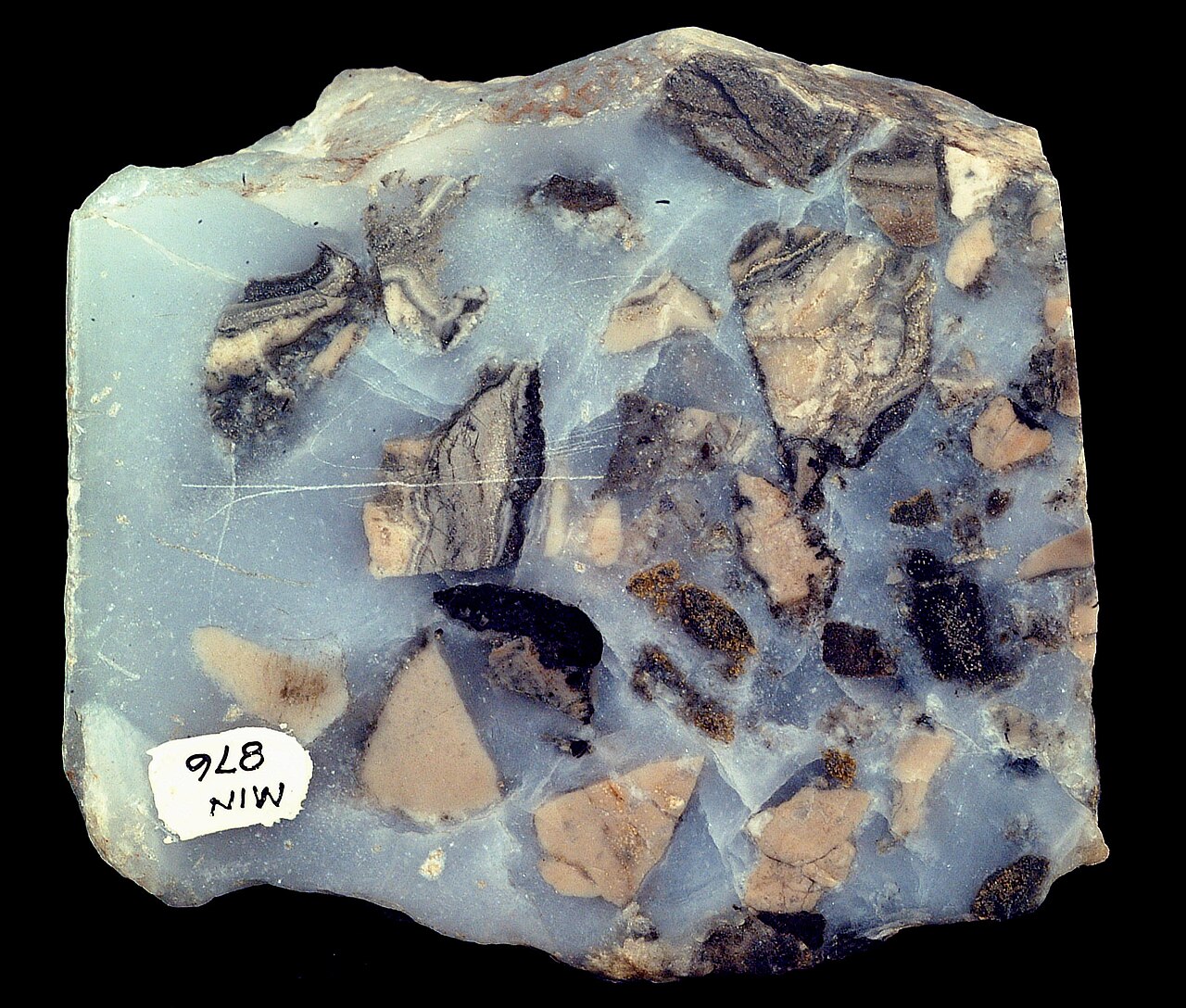
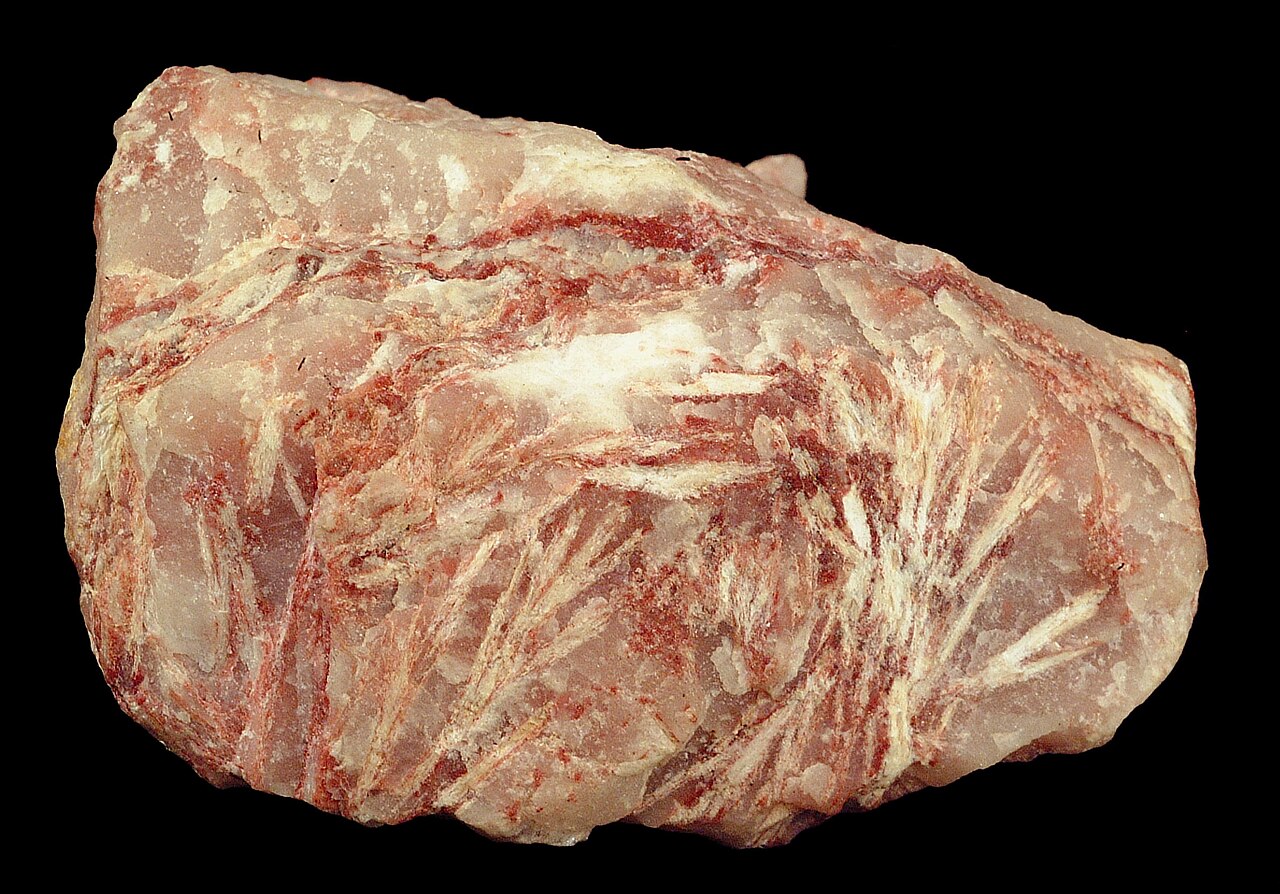
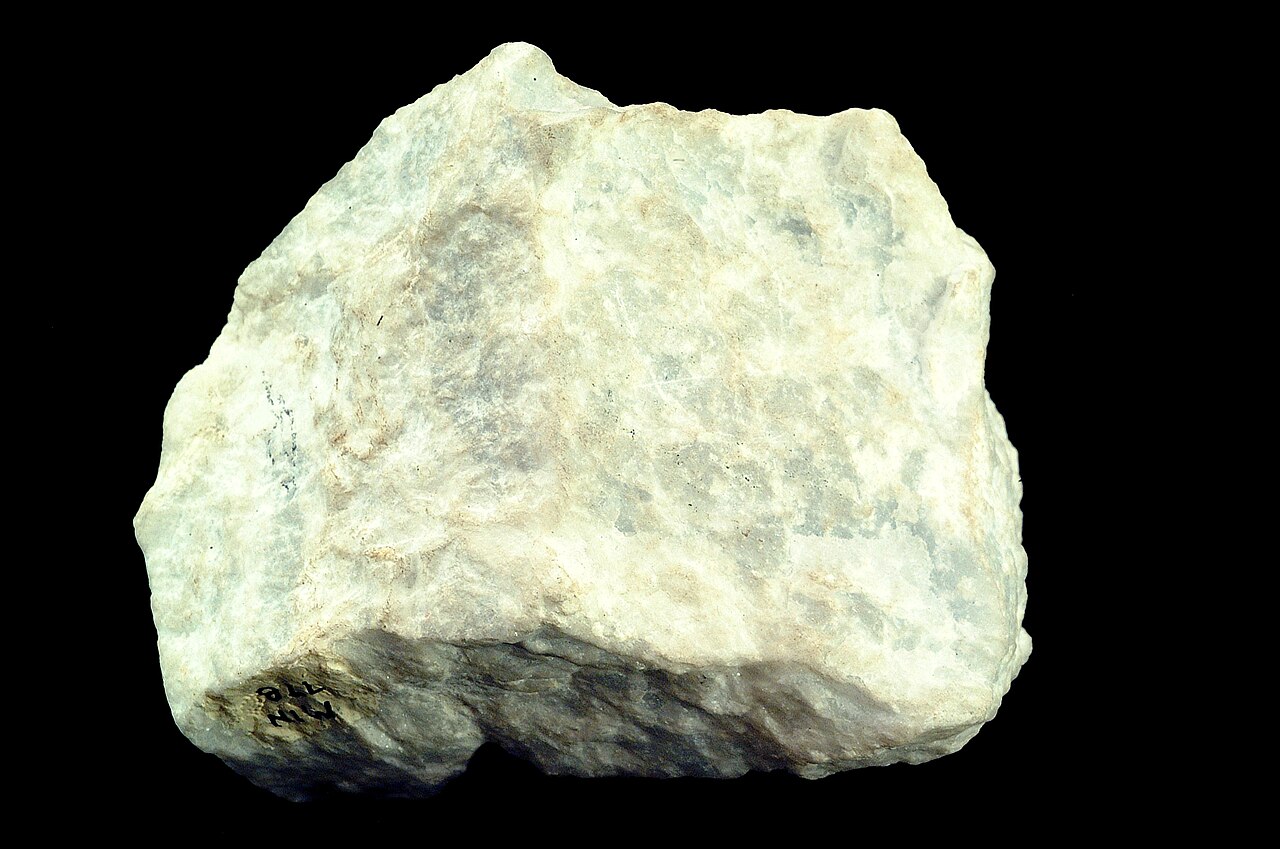
Gypsum crystallizes in four distinct habit types, each with its own visual signature. Selenite tends toward tabular, prismatic, or acicular forms, often appearing flawless and sometimes as thin mica-like sheets. Twinned crystals are common, producing shapes described as "swallow tail" or "arrow/spear-head." Satin spar is almost exclusively prismatic and fibrous, growing in parallel bundles that can form long seams attached to host rock. Desert roses present as bladed rosettes, typically bearing a sandy exterior druse, and form in wet sand rather than attached to a matrix. Gypsum flowers are acicular, scaly, and stellate, frequently displaying severe curves and bends that create "ram's horns," "fishtail," or "swallowtail" twin patterns; they are usually found attached to a matrix or base rock within solution caves. All four varieties can be brittle and fragile, and they may form densely in acicular mats or nets. Selenite crystals can be found both attached to a matrix and as entire free-floating crystals, often in clay beds.
Physical Properties & Identification
Gypsum's softness is its most immediately recognizable trait: at hardness 2 on the Mohs scale, it can be scratched by a fingernail. It also exhibits three unequal cleavages, a pearly lustre, and easy fusibility with loss of water. Solubility in hot dilute hydrochloric acid provides another quick identification test. Selenite typically shows vitreous luster, while satin spar displays a characteristic silky sheen. Fibrous satin spar exhibits chatoyancy—the cat's eye effect—and when cut across its fibers and polished on the ends, it creates an optical illusion where printed images beneath appear to float on the stone's surface, earning it the nickname "television stone." Some selenite and satin spar specimens also display fluorescence or phosphorescence. All four varieties are slightly flexible and sectile, meaning they can be cut or peeled, though they are not elastic and will break if bent too far. Desert roses, due to their sandy exterior druse, are marginally harder to scratch but still yield to a fingernail.
Notable Specimens & Historical Uses
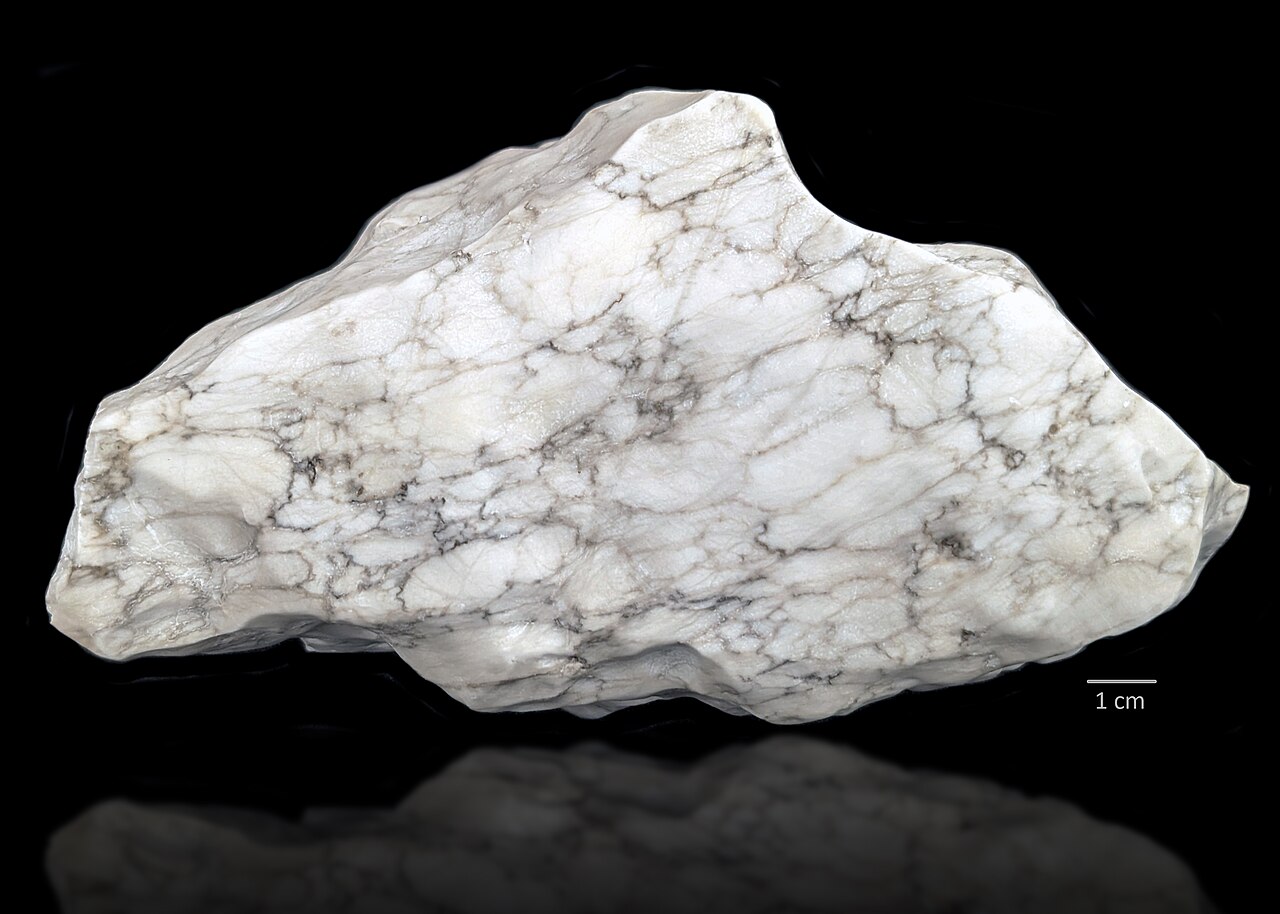
Among the most extraordinary mineral specimens ever discovered is a selenite crystal from the Naica Mine's Cave of the Crystals, measuring 12 meters in length and weighing 12 tons. On a smaller but equally remarkable scale, selenite's thin tabular, mica-like sheets were historically employed as window panes, as seen in the church of Santa Sabina in Rome. Satin spar, prized for its chatoyance, is sometimes cut into cabochons to best showcase its silky optical play. The mineral's color palette ranges from colorless and white to gray, with tints of brown, yellow, red, or blue introduced by impurities such as iron oxides or clay minerals. Transparency varies across the varieties: selenite is most often fully transparent, satin spar tends toward translucency, while rosettes and flowers are frequently opaque due to impurities, inclusions, or their sandy druse. These diverse appearances, all arising from the same calcium sulfate dihydrate formula, make the gypsum family one of the most visually varied groups in the mineral collector's world.
Gallery
Frequently Asked Questions
Who is Gypsum?
Gypsum is a soft sulfate mineral whose formula, CaSO4·2H2O, tells you it is calcium sulfate locked together with two water molecules. It typically forms when seawater or lake water evaporates, or when anhydrite picks up water from its surroundings, making it one of the most widely mined minerals on Earth.
What are Gypsum's powers/role?
In everyday life Gypsum is the backbone of drywall, plaster, and a cheap agricultural fertilizer, while its translucent crystal form (selenite) is prized for carving and sculpture. On the Mohs scale it sits at a mere 2, so it scratches easily, and it dissolves in water at roughly 2–2.5 g/L at room temperature.
How does Gypsum's story end?
Heated or compressed, Gypsum sheds its two water molecules and reverts to anhydrite, effectively losing the 'dihydrate' identity that defines it. In water it simply dissolves, and its retrograde solubility—becoming less soluble as temperature climbs—makes its behavior a well-known exception among common salts.
Why is Gypsum important?
Without it, the construction industry would lose its primary wall-building material and agriculture would lose an inexpensive soil conditioner, so its economic footprint is enormous. Spectacular deposits such as White Sands National Park in New Mexico and the giant crystal caves of the Naica Mine in Mexico also make it a landmark in mineralogy and tourism.
What varieties does Gypsum have?
The same CaSO4·2H2O formula shows up as glassy selenite, fine-grained alabaster, silky satin spar, and the rosette-shaped desert rose. These look and feel completely different from one another, yet they are all the same mineral expressed in different crystal habits.
Elsewhere in the Geology universe
Spotted an error? Know more?
This is a living reference — every entry is fact-audited, and reader corrections feed straight into our audit queue. Suggest an edit · See this site's audit record