Cryosphere
Earth's frozen water component, critical to climate feedbacks.

NASA/Goddard Space Flight Center Scientific Visualization Studio · Public domain
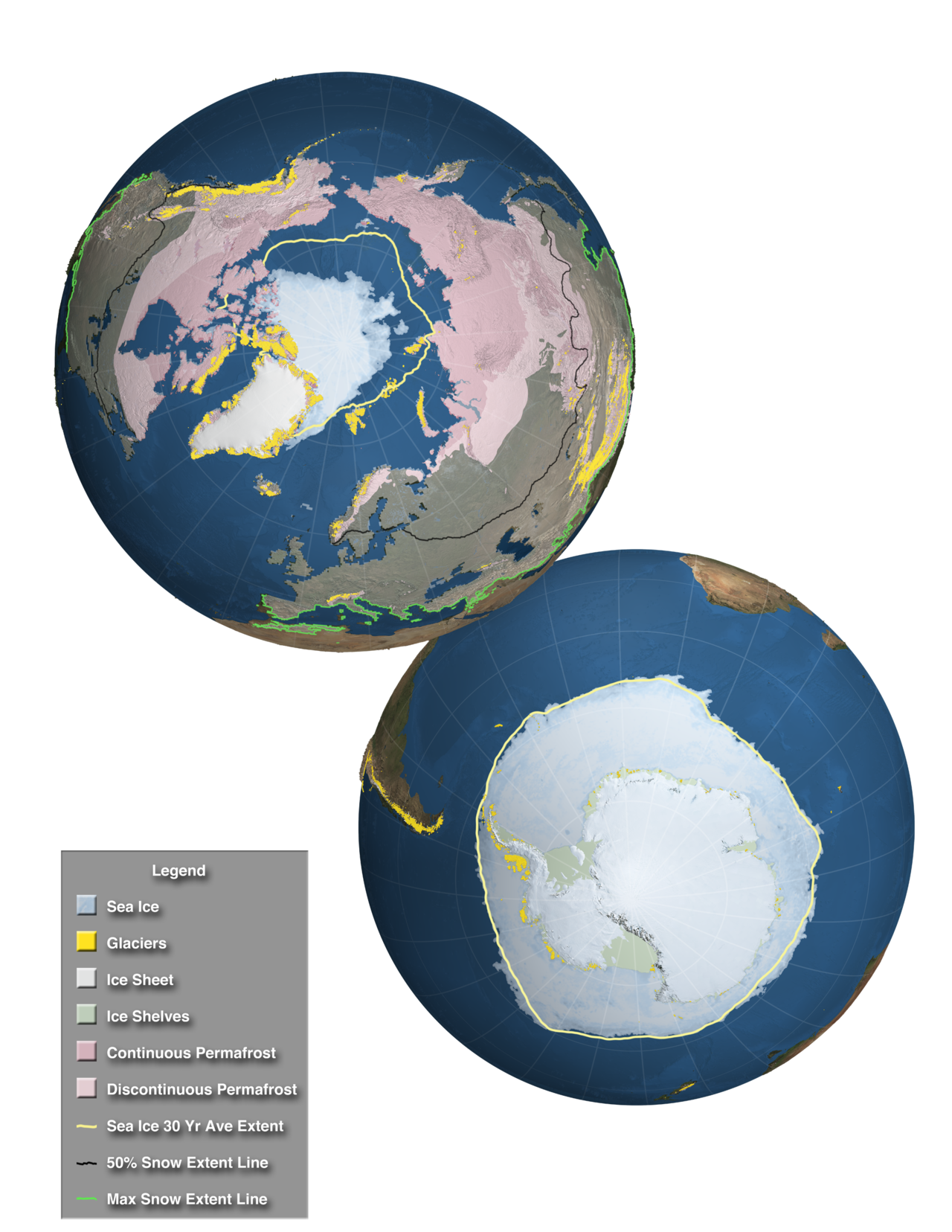
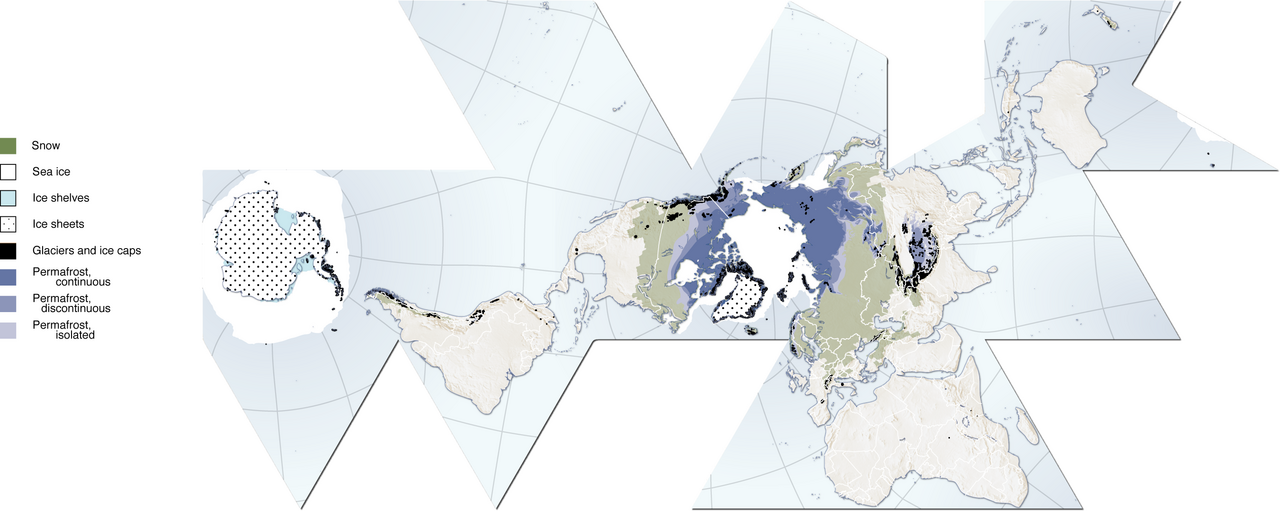
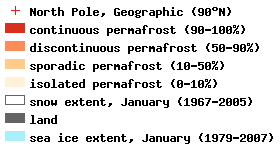
The cryosphere is an umbrella term for those portions of Earth's surface where water is in solid form, including sea ice, lake and river ice, snow, glaciers, ice caps, ice sheets, and frozen ground (permafrost). It is one of five components of the climate system, alongside the atmosphere, hydrosphere, lithosphere, and biosphere, and plays a significant role in the global climate through feedback processes involving surface energy, moisture fluxes, clouds, the water cycle, and atmospheric and oceanic circulation.
- definition
- Portions of Earth's surface where water is in solid form
- etymology
- From Greek 'kryos' (cold, frost, ice) and 'sphaira' (globe)
- components
- Sea ice, lake/river ice, snow, glaciers, ice caps, ice sheets, frozen ground (permafrost)
- global ice cover
- Approximately 10% of Earth's surface covered by ice, rapidly decreasing
- largest ice volume
- Antarctica, principally the East Antarctic Ice Sheet
- largest areal extent
- Northern Hemisphere winter snow and ice, averaging 23% of hemispheric surface in January
- residence time range
- Seasonal (snow, freshwater ice) to ~1 million years (deep ice in East Antarctica)
Lore & Background
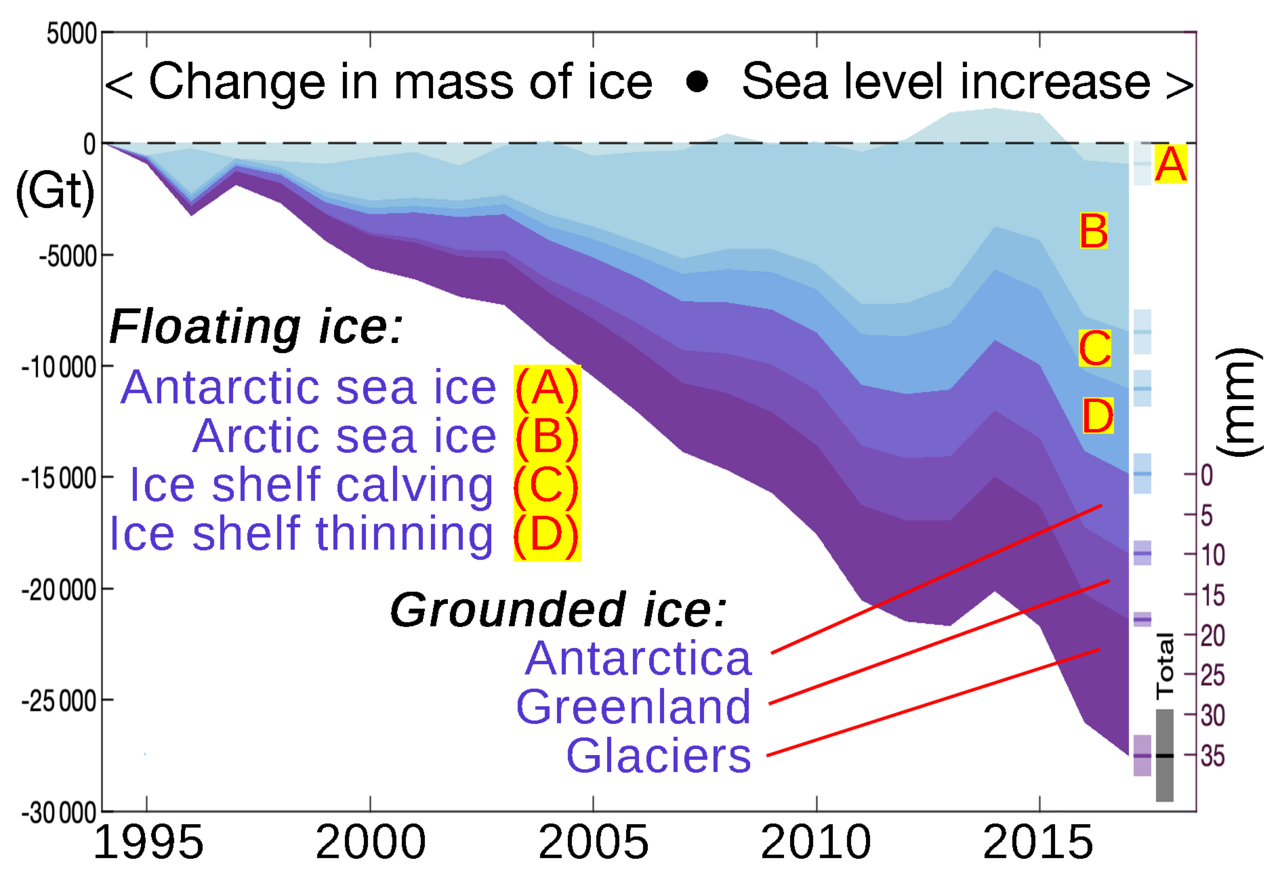
Current reductions in the cryosphere caused by climate change are measurable in ice sheet melt, glacier decline, sea ice decline, permafrost thaw, and snow cover decrease. The cryosphere-climate feedbacks are numerous and operate over wide spatial and temporal scales, from local seasonal cooling to hemispheric-scale ice sheet variations over thousands of years. These feedbacks are often complex and incompletely understood; for example, the sea ice-albedo feedback involves complex interactions with lead fraction, melt ponds, ice thickness, snow cover, and sea-ice extent.
Reader's Guide
The cryosphere is integral to the global climate system, with its feedbacks influencing surface energy and moisture fluxes, clouds, the water cycle, and atmospheric and oceanic circulation. Its high albedo and insulating properties significantly affect Earth's radiative balance and heat transfer. The cryosphere's rapid current decline—evident in ice sheet melt, glacier retreat, sea ice loss, permafrost thaw, and reduced snow cover—underscores its role as a sensitive indicator of climate change. Understanding and modeling cryospheric extent, thickness, and radiative/thermal properties is crucial for climate research, as the cryosphere's changes have cascading effects on global climate patterns, including monsoon modulation and sea-level rise. The complexity and incomplete understanding of cryosphere-climate feedbacks highlight the need for continued interdisciplinary study.
Did You Know?
- The term cryosphere comes from the Greek words 'kryos' (cold, frost, or ice) and 'sphaira' (globe or ball).
- Approximately 10% of Earth's surface is covered by ice, but this is rapidly decreasing due to climate change.
- Deep ice in parts of East Antarctica may have an age approaching 1 million years.
- Snow cover exhibits the greatest influence on Earth's radiative balance in the spring (April to May) when incoming solar radiation is greatest over snow-covered areas.
Definition and Place in Earth's Systems
The cryosphere is the collective name for every region on Earth's surface where water exists in its solid state. This encompasses a broad range of features: seasonal snowpacks, freshwater ice forming on lakes and rivers, the vast expanses of sea ice, glaciers, the enormous ice sheets and caps, and permanently frozen ground including permafrost. Because frozen water is still water, the cryosphere naturally overlaps with the hydrosphere. In the broader architecture of Earth's climate, it stands as one of five essential components alongside the atmosphere, hydrosphere, lithosphere, and biosphere. The name itself is drawn from two Greek roots: kryos, meaning cold, frost, or ice, and sphaira, meaning globe or sphere. The interdisciplinary field of cryospheric sciences draws on geology, hydrology, meteorology, and climatology to study these frozen regions, functioning much like glaciology does within the broader Earth sciences. The process by which these frozen features retreat is specifically termed deglaciation.
Physical Properties That Shape Climate
Snow and ice possess a set of physical characteristics that profoundly influence how energy moves between Earth's surface and the atmosphere. The most consequential of these is albedo, the fraction of incoming solar radiation that gets reflected back. Non-melting snow surfaces typically reflect between 80 and 90 percent of shortwave radiation, making them extraordinarily bright compared to most other land surfaces. This high reflectivity drives sharp seasonal shifts in surface brightness at high latitudes during autumn and spring transitions. Thermal diffusivity is another critical property: snow and ice conduct heat far more slowly than air, many orders of magnitude less efficiently. This means a layer of snow insulates the ground beneath it, while sea ice shields the ocean below from both heat and moisture exchange with the atmosphere. Even a thin skin of ice can eliminate moisture flux entirely, though heat still passes through until the ice thickens beyond roughly 30 to 40 centimeters. A modest snow layer on top of ice can dramatically slow further ice growth. Finally, the latent heat of fusion—approximately 334,000 joules per kilogram at zero degrees Celsius—means melting ice absorbs enormous energy, retarding spring and summer warming.
Residence Time and Global Distribution
The lifespan of a single water molecule within the cryosphere varies across an astonishing range. Snow cover and freshwater ice are essentially seasonal phenomena, melting and reforming year after year. Most sea ice, outside the central Arctic, persists for only a few years before breaking up. In stark contrast, water locked within glaciers, ice sheets, or ground ice can remain frozen for ten to one hundred thousand years or longer. Deep ice in parts of East Antarctica approaches an age of nearly one million years, making it among the oldest accessible water on the planet. In terms of total volume, the vast majority of the world's ice resides in Antarctica, primarily within the East Antarctic Ice Sheet. Yet when measured by surface area, the picture flips: Northern Hemisphere winter snow and ice cover the largest expanse, averaging about 23 percent of the hemispheric surface in January. This combination of enormous areal extent and unique physical properties makes snow and ice central to climate research, and underscores why accurately observing and modeling their extent, thickness, and radiative behavior remains a priority for scientists.
A Rapidly Shrinking Shield
Roughly ten percent of Earth's surface is currently blanketed by ice in some form, but that share is diminishing at a measurable pace. The cryosphere is not a static feature; it is an active participant in the global climate system, exerting feedbacks through its influence on surface energy and moisture fluxes, cloud formation, the water cycle, and both atmospheric and oceanic circulation. Because of these feedbacks, the cryosphere plays a significant role in how climate models respond to global change. Today, the effects of climate change are clearly visible across every major cryospheric component: ice sheets are losing mass, glaciers are retreating, sea ice extent is declining, permafrost is thawing, and seasonal snow cover is shrinking. The term deglaciation captures this retreat of frozen features. As the cryosphere contracts, the feedbacks it once provided—insulating the ground, reflecting sunlight, moderating ocean-atmosphere exchange—are weakened, potentially amplifying the very warming that drives the loss. This makes the cryosphere both a recorder of past climate and a sensitive amplifier of present change.
Gallery

Frequently Asked Questions
What is the Cryosphere?
The Cryosphere is the name geologists give to every region of Earth's surface where water sits in solid form, from sea ice to permafrost. The word itself blends two Greek roots meaning 'cold' and 'globe.'
What role does the Cryosphere play in Earth's climate?
It functions as one of five core pillars of the climate system and drives feedback loops that regulate surface energy, moisture transport, cloud cover, and ocean currents. Disrupting those frozen zones would ripple through the entire atmospheric and hydrological cycle.
How much of the planet does the Cryosphere cover?
About ten percent of Earth's surface is currently locked in ice, a figure that is dropping rapidly. The single biggest ice reservoir is Antarctica's East Antarctic Ice Sheet, while the widest seasonal blanket of snow and ice stretches across the Northern Hemisphere each January.
Why is the Cryosphere important to geology and climate science?
It acts as a massive reservoir of fresh water and a powerful reflector of incoming sunlight, making it a key lever on global temperature and sea level. Tracking how it shrinks or shifts gives scientists a direct readout on how the whole climate system is responding to warming.
What specific features are included in the Cryosphere?
The category spans sea ice, frozen lakes and rivers, seasonal snowpack, glaciers, ice caps, continental ice sheets, and permanently frozen ground known as permafrost. All of these interact with the atmosphere, hydrosphere, lithosphere, and biosphere to shape the planet's environment.
More in Geology 1-24
Elsewhere in the Geology universe
Spotted an error? Know more?
This is a living reference — every entry is fact-audited, and reader corrections feed straight into our audit queue. Suggest an edit · See this site's audit record