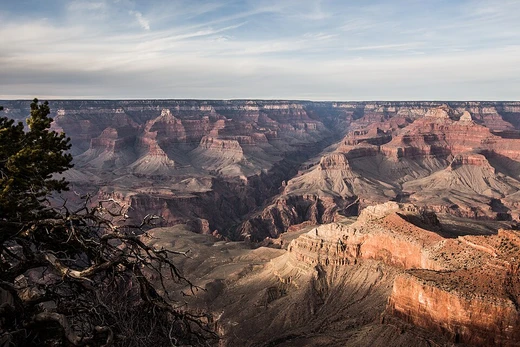
Erosion
Natural removal and transport of Earth's surface materials by agents like water and wind.

Erosion is the action of surface processes such as water flow or wind that removes soil, rock, or dissolved material from one location on the Earth's crust and transports it to another location where it is deposited. It is distinct from weathering, which involves no movement. Erosion is a natural process, but human activities have increased the rate of soil erosion globally by 10 to 40 times, making excessive erosion one of the most significant environmental problems worldwide.
- field
- Geology, Geomorphology, Environmental Science
- known_for
- Removal and transport of soil and rock by water, wind, ice, and gravity; primary cause of land degradation
- primary_agents
- Rainfall, rivers, coastal waves, glaciers, wind, groundwater, mass movements
- human_impact
- Increases erosion rates 10–40 times globally; up to 100 times natural rate in Appalachian agriculture sites
- land_degradation_share
- 84% of global degraded land due to water and wind erosion
Lore & Background
Erosion occurs through physical (mechanical) processes, such as the impact of raindrops causing splash erosion, or chemical processes like dissolution. Splash erosion is the first stage, followed by sheet, rill, and finally gully erosion, the most severe. Rivers erode vertically and laterally, with most erosion happening during floods; bank erosion is measured using metal rods. Coastal erosion involves hydraulic action, wave pounding, abrasion, corrosion, attrition, and bioerosion.
Reader's Guide
Erosion is a fundamental geological process shaping landscapes, but its acceleration by human activities—such as intensive agriculture, deforestation, roads, anthropogenic climate change, and urban sprawl—has made it a critical environmental concern. On-site impacts include loss of nutrient-rich topsoil, reduced agricultural productivity, ecological collapse, and desertification. Off-site effects include sedimentation of waterways, eutrophication, and damage to infrastructure. Water and wind erosion together account for about 84% of global land degradation. While erosion is natural, excessive erosion is largely preventable through remediation practices. Understanding erosion's mechanisms—from raindrop impact to river meandering and coastal bioerosion—is essential for managing soil loss and protecting ecosystems and human settlements.
Did You Know?
- Splash erosion can eject soil particles up to 0.6 m vertically and 1.5 m horizontally on level ground.
- A gully is defined by a critical cross-sectional area of at least one square foot, beyond which normal tillage cannot erase it.
- Human activities have increased the global rate of soil erosion by 10 to 40 times, and up to 100 times the natural rate in Appalachian Mountain agriculture sites.
More in Geology 1-24
Elsewhere in the Geology universe
Spotted an error? Know more?
This is a living reference — every entry is fact-audited, and reader corrections feed straight into our audit queue. Suggest an edit · See this site's audit record